Fix it once.
The AI learns.
Post-editing AI output is waterfall with a faster first draft — you still hunt down every instance of every mistake. Codex works differently: when you correct the AI, that correction becomes steering. Future drafts improve. Every fix compounds across the whole project.
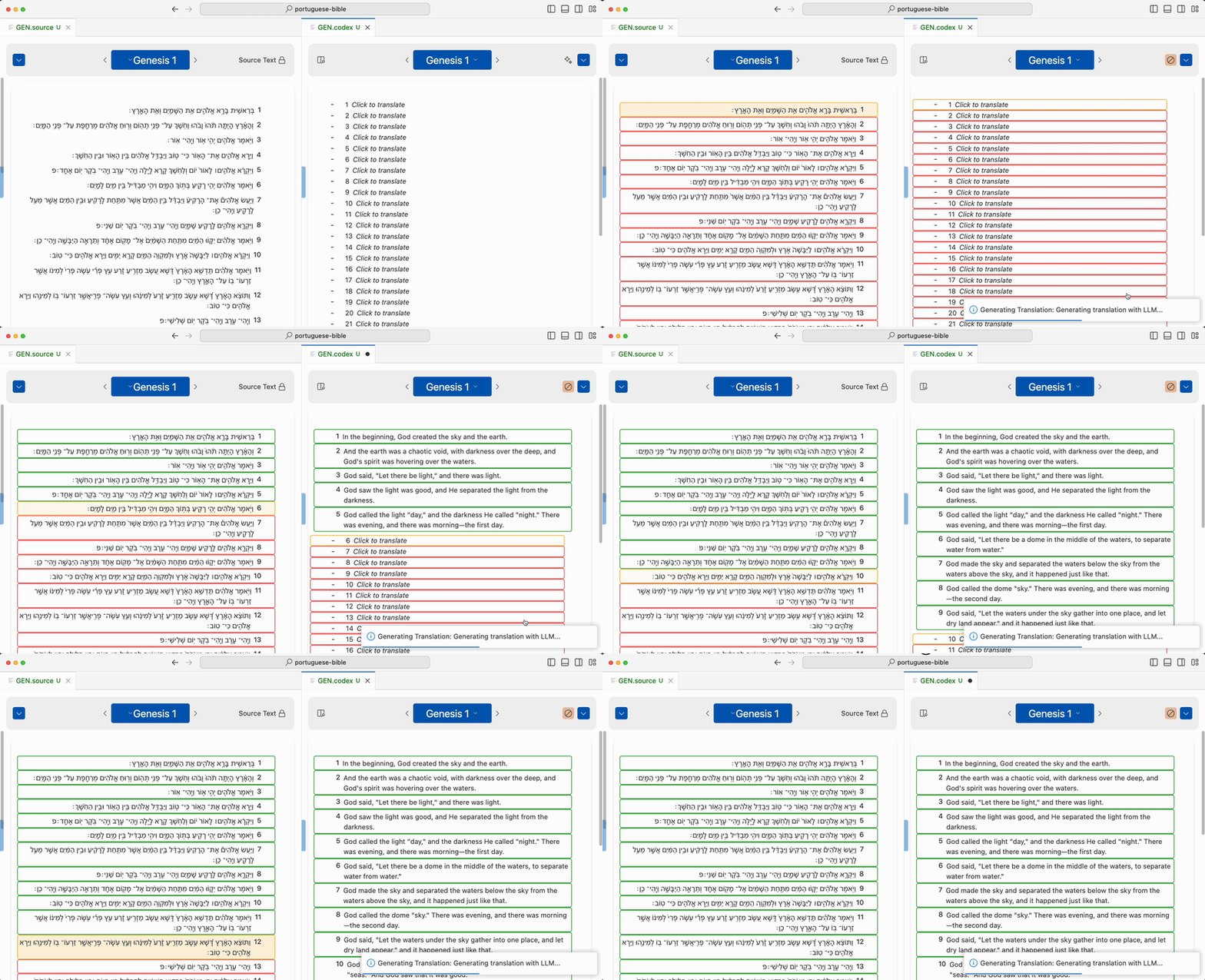
Why post-editing never ends
PEMT (Post-Edit Machine Translation) has a structural flaw: fixing an AI mistake after the fact does nothing to prevent that same mistake from appearing again in the next chapter. You become a correction machine running on a treadmill.
Every mistake repeats
Fix a terminology error in chapter 3, and it still appears in chapters 4 through 40. Post-editing fixes output, not the source of the problem.
Revisions don't compound
In a PEMT workflow, the effort you put into chapter 3 does nothing to help chapter 4. Every chapter starts from the same uncorrected baseline.
AI without steering is just faster drafting
Bolt AI onto a PEMT workflow and you get faster first drafts with the same endless post-editing. Speed without direction doesn't reduce workload — it multiplies it.
How Codex works
Not a live error-checker — a steering system. You make a correction once, and the AI is directed not to repeat it. Quality compounds across every chapter that follows.
Without Codex
With Codex
Fix it the first time. The AI handles the rest of the project.
What gets better every time you steer
When you correct a term once, Codex encodes that decision. The AI applies it across every subsequent draft — no hunting, no repetition.
Corrections are grounded in your project's translation philosophy and audience. Each one makes future suggestions more project-aware, not more generic.
Catch a register shift once and direct the AI away from it. You don't fix tone; you teach it.
This isn't post-editing — you're not cleaning up output after the fact. You're steering the AI so that output improves before it reaches the next chapter.
You direct. The AI executes.
Codex isn't autopilot and it isn't a spell-checker. The translator is always the expert. When you make a correction, that decision is preserved as steering — and the AI applies it going forward without being asked again.
This is the difference between Codex and PEMT: you're not cleaning up after a machine. You're directing it. One correction now means zero repetitions later.
Corrections become steering — the AI doesn't repeat them
Each correction improves every draft that follows across the project
Less post-editing per chapter as the AI gets steered
Living Memory
Steering gets smarter when powered by Living Memory — a contextual project knowledge base that retains your decisions, voice, and intent so the AI applies them consistently without being reminded.
Stop re-editing the same mistakes.
Start steering.
Download Codex and experience a workflow where every correction makes the next chapter easier — not just the current one.